
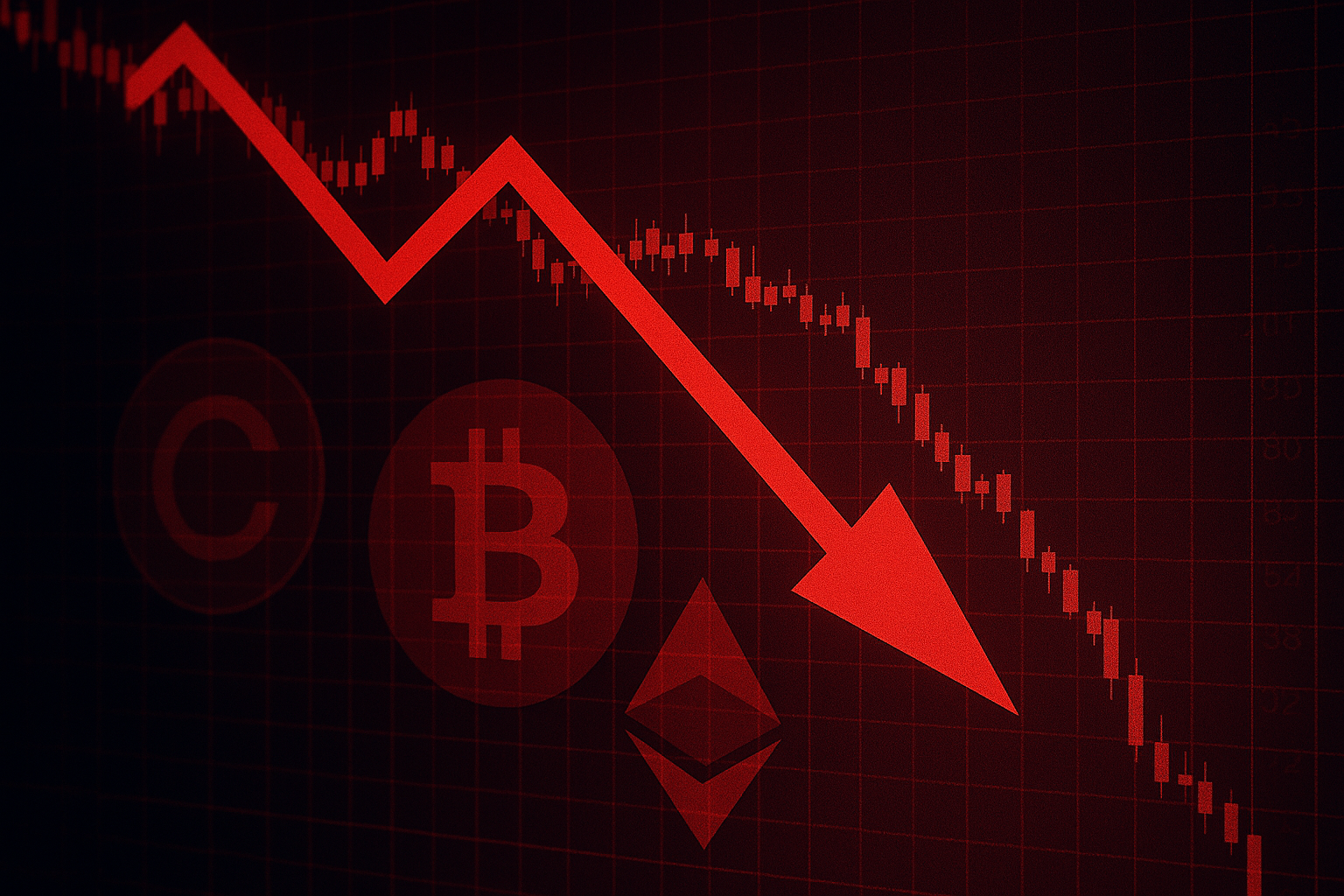

Bitcoin Prices Plummet Below $90,000 in Sharp Market Correction
Bitcoin has experienced a dramatic decline, plunging below the $90,000 mark on Wednesday, effectively erasing all gains from 2025. This downturn has significant implications for the cryptocurrency market, exacerbated by ETF outflows and forced liquidations. The sentiment among investors has shifted dramatically to “extreme fear,” as the market sees over a billion dollars evaporate in value.
Market Dynamics and Factors Behind the Decline
The stunning decrease of Bitcoin is marked by a 28% drop from its early October high of over $126,000. Ethereum has also suffered, dropping by 6% and falling below $3,000. Analysts suggest that this 43-day correction is one of the steepest since 2017, driven by forced liquidations and a surge in ETF sell-offs.
According to Vetle Lunde of K33 Research, continuous ETF outflows have aggravated the selling pressure. American Bitcoin spot ETFs have lost approximately $2.3 billion over five sessions, leading to significant redemptions from major institutional investors. As larger buyers exit, smaller traders have begun to follow suit in a rush to sell.
The Impact of Leverage and Economic Uncertainty
A critical factor contributing to the market turmoil is the excessive use of leverage. The recent U.S. government shutdown resulted in the loss of key economic data, creating uncertainty about the Federal Reserve’s decision on interest rates. As analytical perspectives shifted—from an expectation that rate cuts would save the crypto market to uncertainty—long leveraged positions faced forced liquidations, further driving the sell-off.
Where is Bitcoin Heading? Analysts Weigh Scenarios
Looking ahead, analysts have outlined potential future scenarios for Bitcoin. Lunde notes that a support range between $84,000 and $86,000 may signal a basic recovery from this correction. However, if conditions worsen, Bitcoin could revisit April lows near $74,000, a crucial threshold for major investors like MicroStrategy.
In a more pessimistic outlook, some analysts fear an 80% decline from recent peaks, potentially pushing Bitcoin into the $20,000 to $25,000 range. However, it is believed that this would require a larger credit crisis to manifest. Presently, traditional market assets are maintaining stability, which may limit further declines in cryptocurrency without a broader market collapse.
As the situation unfolds, Bitcoin remains caught between opposing forces. Long-term holders are accumulating at current levels, while institutions are not panicking to sell off entirely. Nonetheless, aggressive buying is absent, suggesting that without a macroeconomic catalyst—such as a significant Federal Reserve pivot or tangible gains in productivity—Bitcoin may remain unpredictable and volatile into early 2026.
