
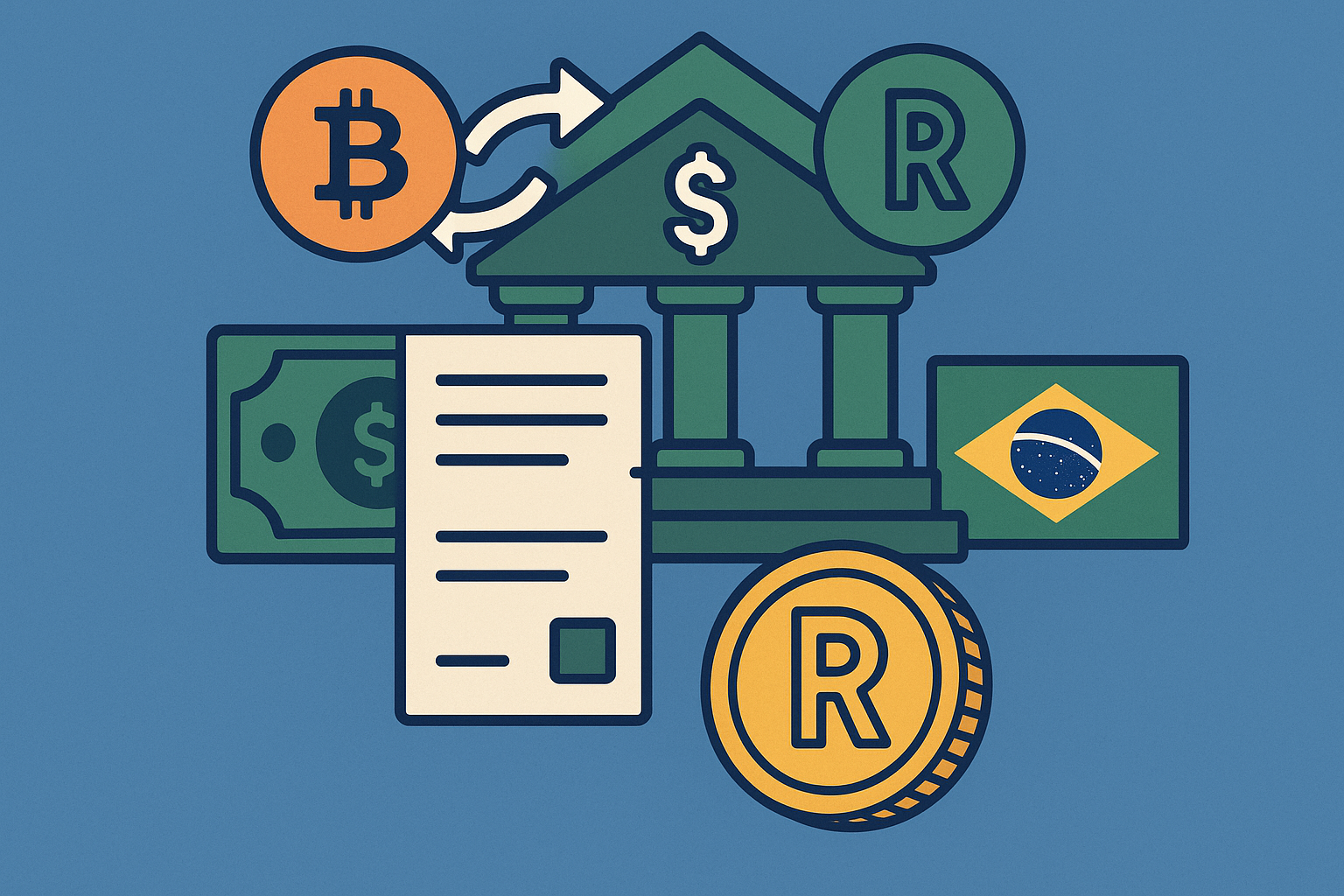

The Central Bank of Brazil has unveiled a comprehensive regulatory framework governing cryptocurrency transactions, particularly focusing on stablecoins. This initiative aims to bring the burgeoning digital asset market under stricter scrutiny, effective from early 2026, and potentially reshape the dynamics of Brazil’s financial landscape.
New Regulatory Measures for Cryptocurrencies
- The Brazilian central bank has published rules under resolutions 519, 520, and 521.
- Transfers with unauthorized foreign parties are capped at $100,000.
- The rules become effective on February 2, 2026, with reporting commencing May 4.
Brazil’s Central Bank (BCB) has finalized a new regulatory framework that will place transactions involving stablecoins and specific crypto wallet transfers within the scope of foreign exchange laws. Published on Monday, these regulations outline how virtual asset service providers (VASPs) will operate similarly to licensed financial institutions.
The newly created category of legal entities, known as Sociedades Prestadoras de Serviços de Ativos Virtuais (SPSAVs), will be mandated to adhere to consumer protection protocols, transaction transparency, and anti-money laundering controls. All significant players involved in crypto brokerage, custody, and intermediation will need to comply with these requirements.
Redefining Stablecoins in Brazil’s Financial System
According to Resolution 521, stablecoins will now be classified as foreign currency under Brazil’s financial system. This shift means that the buying, selling, and trading of virtual assets pegged to fiat currencies will be treated as foreign exchange operations, applicable to both domestic and international transactions.
Such transactions will only be permitted through institutions authorized to engage in foreign exchange activities or those registered as SPSAVs. Any transaction with an unapproved foreign counterparty will be limited to $100,000 per transfer, aimed at preventing circumvention of official financial channels while monitoring substantial flows.
This regulatory decision enables Brazil to incorporate financial movements tied to stablecoins into its official balance of payments data. Previously, these transactions were not captured within the traditional financial framework, leading to significant gaps in economic data and policy planning.
Compliance Overhaul for Crypto Wallet Transfers
Transfers involving self-custodied wallets will also fall under this new regulatory regime, provided they are facilitated by licensed service providers. In this scenario, intermediaries will be responsible for identifying wallet owners and verifying both the sources and destinations of assets, whether transactions are cross-border or not.
While the regulations do not prohibit self-custody, they impose stringent documentation requirements on interactions between personal wallets and the regulated financial ecosystem. This adjustment seeks to address long-standing compliance and anti-money laundering challenges arising from the decentralized nature of crypto networks.
By extending banking-level controls to wallet activities, the BCB aims to establish continuity in its approach to financial data integrity, ensuring all intermediary-related transactions meet uniform standards, irrespective of the custody model.
Implications for Small Cryptocurrency Businesses
While these regulatory changes aim to enhance oversight, they may impose additional burdens on small cryptocurrency enterprises. Complying with the new legal requirements will necessitate internal restructuring, technological upgrades, and more robust compliance teams.
Such transitions could disproportionately affect startups and local exchanges with limited access to capital or international compliance infrastructure. Established platforms and financial institutions are likely to adapt more seamlessly, leveraging existing legal services and regulatory expertise to meet new demands.
The Brazilian cryptocurrency market ranks as the second largest in Latin America after Argentina. This regulatory milestone signifies a shift from experimental approaches toward integrating cryptocurrencies into the formal financial system.
Addressing Data Gaps in Brazil’s Financial System
The BCB characterizes these new rules as essential for promoting legal security and closing regulatory loopholes. By redefining stablecoin activities as a form of exchange, the central bank gains clearer visibility into previously obscured financial transactions.
Although these new rules will not eliminate the use of crypto assets, they will subject them to regulations that already apply to fiat currency. This includes monitoring mechanisms aimed at reducing fraud, improving tax compliance, and aligning the treatment of crypto-assets with Brazil’s financial reporting standards.
With full implementation scheduled for 2026, market players should begin preparing to adapt to a financial system that now regards cryptocurrencies as being subject to the same regulations as traditional currency.
