
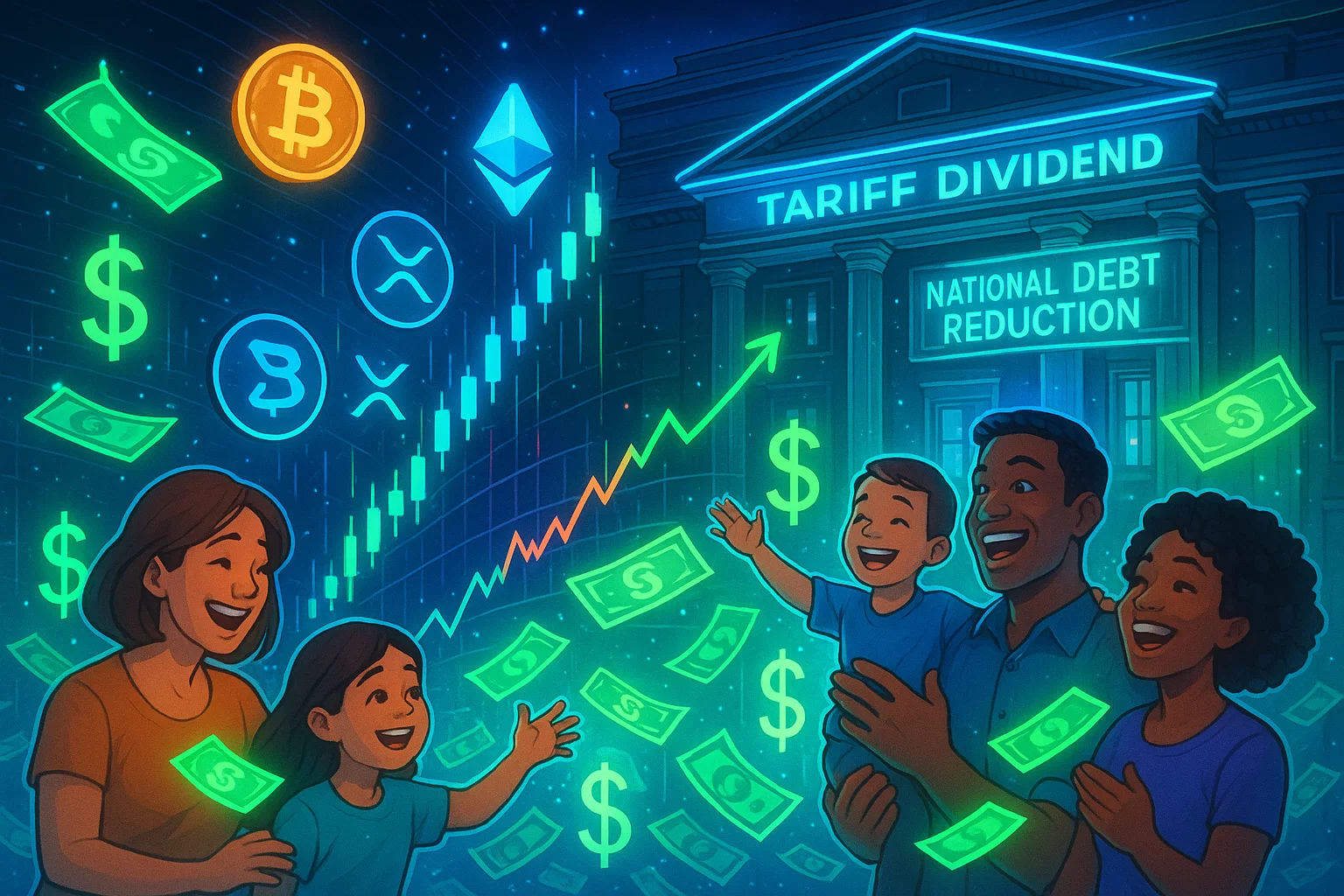

This article explores former President Donald Trump’s proposal to offer American families tariff rebates ranging from $1,000 to $2,000, aimed at stimulating consumer spending and addressing national debt. Analysts are speculating about the potential impact on altcoin markets amidst looming legal challenges to the plan.
Trump’s Proposed Tariff Rebates: Legal Hurdles Ahead
- Trump envisions rebate checks of $1,000 to $2,000 for American households.
- These rebates aim to chip away at a national debt of $37 trillion, though they face significant legal obstacles.
- Analysts predict a selective rally in altcoins rather than a broad market surge.
Former President Donald Trump is contemplating a program that would offer American households tariff rebates between $1,000 and $2,000. He describes this initiative as a “dividend for the people,” claiming it has the potential to invigorate consumer spending and impact markets significantly.
The primary goal of this proposal is to address the staggering national debt, currently standing at $37 trillion. However, speculation suggests that the rebates could also catalyze a surge in investments in altcoins, similar to the behavior observed during the pandemic relief era of 2020-2021.
Political and Legal Challenges Surrounding the Rebate Plan
The rebate funds would reportedly arise from the revenue generated by Trump’s aggressive tariff policies. By 2025, these tariffs have reportedly yielded around $215 billion, with projections suggesting they could reach $300 billion by year-end.
Trump has emphasized that reducing the national debt remains a priority. He hinted at the possibility of allocating $1,000 to $2,000 directly to Americans, stating, “It would be fantastic.” The administration has asserted that tariffs could potentially yield more than $1 trillion annually, although these assertions remain highly dubious.
However, the legality of these tariffs is currently under serious judicial scrutiny. The Supreme Court is scheduled to hear a case in November 2025 that will determine whether the president possesses the constitutional authority to impose broad tariffs. Previous decisions from the U.S. Court of Appeals have already raised critical questions about this authority.
The Treasury Secretary, Scott Bessent, has issued a warning that a judicial ruling against the tariffs could compel the government to recover between $750 billion and $1 trillion in collected and anticipated revenues. Consequently, while the proposal may be enticing, the accompanying legal uncertainties render it far from assured.
Potential Market Impact on Altcoins
Market analysts suggest that if these rebates materialize, they could lead to increased investment in altcoins. A 2023 study by Harvard’s Marco Di Maggio highlighted that additional household income often triggers increased cryptocurrency purchases, particularly among retail investors seeking returns or protection from inflation.
This trend mirrors the altcoin boom witnessed during the COVID-19 pandemic when Bitcoin’s dominance dropped significantly as more funds flowed into alternative cryptocurrencies. Presently, with interest rates above 4% and a total cryptocurrency market capitalization of around $4 trillion, conditions are somewhat transformed.
Experts, including strategists from Wintermute, argue that any new “altcoin season” would likely be more selective, prioritizing coins with tangible utility over speculative assets. Nevertheless, the psychological boost from direct payments, along with anticipated interest rate cuts from the Federal Reserve, could reignite retail investor enthusiasm.
Innovative blockchain platforms such as XRP and Solana may particularly benefit from a renewed focus on utility-driven cryptocurrencies in this evolving market landscape.
