

Summary
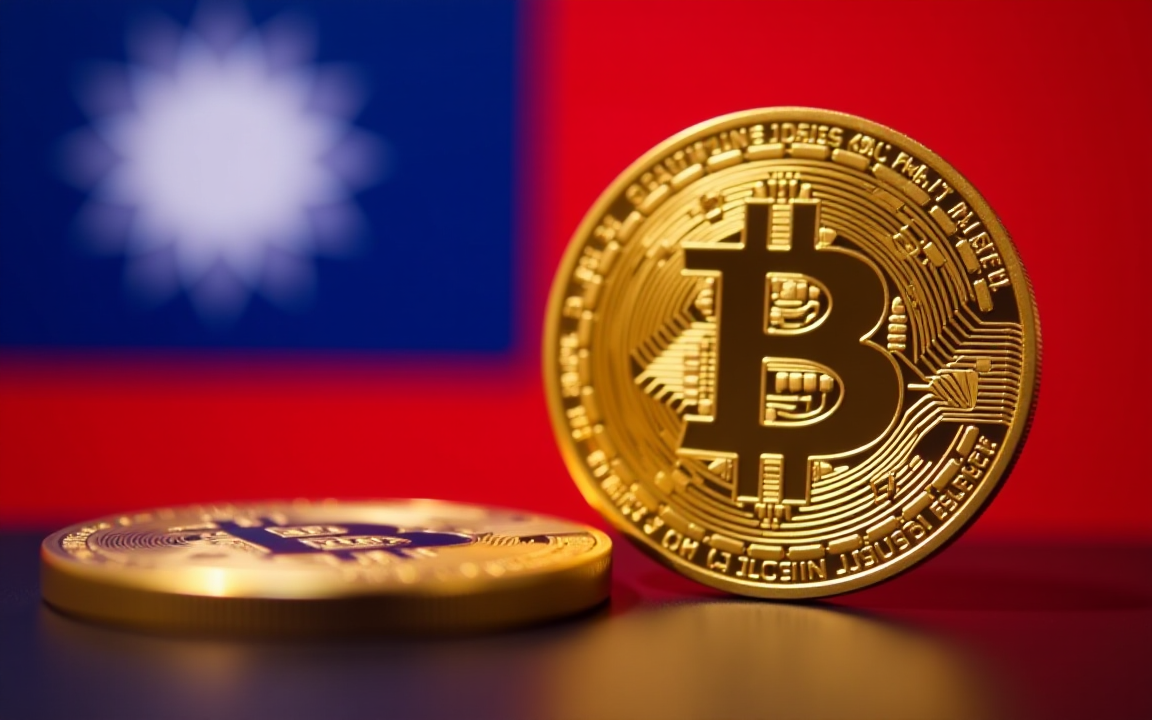
Amid rising inflation and growing concerns about reliance on U.S. Treasury securities, Taiwan is considering a significant policy shift that could see Bitcoin included in its national reserves. Legislator Ko Ju-Chun has proposed this measure, highlighting the need for diversification in the island nation’s financial assets.
Taiwan Considers Bitcoin for National Reserves
In a bold move towards financial diversification, Taiwan is contemplating adding Bitcoin to its national reserves. The island, currently holding 423 metric tons of gold, is facing increasing inflationary pressures and concerns over its heavy dependence on U.S. Treasury bonds.
Legislator Ko Ju-Chun has recently advocated for the inclusion of Bitcoin in the central bank’s reserves, citing its decentralized nature and fixed supply as a strategic safeguard against potential financial instability. This proposal signifies a broader reassessment of traditional reserve assets, especially as over 90% of Taiwan’s $577 billion foreign exchange reserves are tied up in U.S. Treasury securities, raising alarms about liquidity and diversification during crises.
Currency Risks and Dependence on U.S. Treasury Securities
As a trade-driven economy, Taiwan is particularly vulnerable to geopolitical shifts and inflation trends. The escalating tensions between the U.S. and China, along with potential supply chain disruptions, have intensified scrutiny of the Taiwanese dollar (NTD).
Currently, Taiwan holds nearly all its foreign currency in U.S. dollar-denominated assets, including 423 tons of gold. Analysts warn that this concentration not only links Taiwan’s economic stability to U.S. monetary policy but also exposes it to sanctions should diplomatic relations worsen.
During a parliamentary address, Ko underscored the requirement for “strategic flexibility” in managing the nation’s reserves, particularly in light of scenarios involving financial decoupling or restricted access to dollar markets.
Bitcoin as an Alternative Asset, Not a Replacement
Ko’s initiative aims not to overhaul Taiwan’s existing reserve strategy but rather to diversify it. He envisions allocating a small portion of the nation’s assets to Bitcoin, arguing that it would provide a non-correlated asset that is globally accessible and not subject to arbitrary inflation.
With a fixed supply of 21 million tokens and a decentralized ledger system, Bitcoin presents a uniquely stable alternative compared to fiat currencies, which can be expanded by central banks in response to economic shocks, according to Professor Liu Yiru of National Taiwan University.
Former Prime Minister Chen Cong echoed these sentiments, suggesting that while Bitcoin may not be suitable as a widely utilized transactional currency, its potential as a digital store of value could bolster Taiwan’s financial sovereignty.
Global Momentum for Bitcoin Reserves
Taiwan’s discussions come as other governments around the world experiment with incorporating Bitcoin at the state level. Recently, New Hampshire passed the Bitcoin Reserve Act, allowing its inclusion in state reserves—a move that has sparked conversations across other U.S. states and in emerging markets grappling with high inflation or monetary instability.
Although Taiwan has yet to finalize such measures, the ongoing dialogue signals a shift in how policymakers are viewing crypto-assets—not merely as speculative investments but as integral components of national financial infrastructure.
In addition to legislative interest, Ko has suggested establishing a task force to explore the feasibility, volatility, and custody risks related to holding Bitcoin reserves. While the central bank has not publicly commented on the proposal, it is anticipated to be a topic of further discussion during upcoming budget and monetary policy reviews.
The broader context of these debates includes Taiwan’s need to balance its robust technology sector with the risks posed by its geopolitical positioning. Diversifying reserve assets could serve not only economic ends but also enhance strategic autonomy.
